
Children learning to skate in china

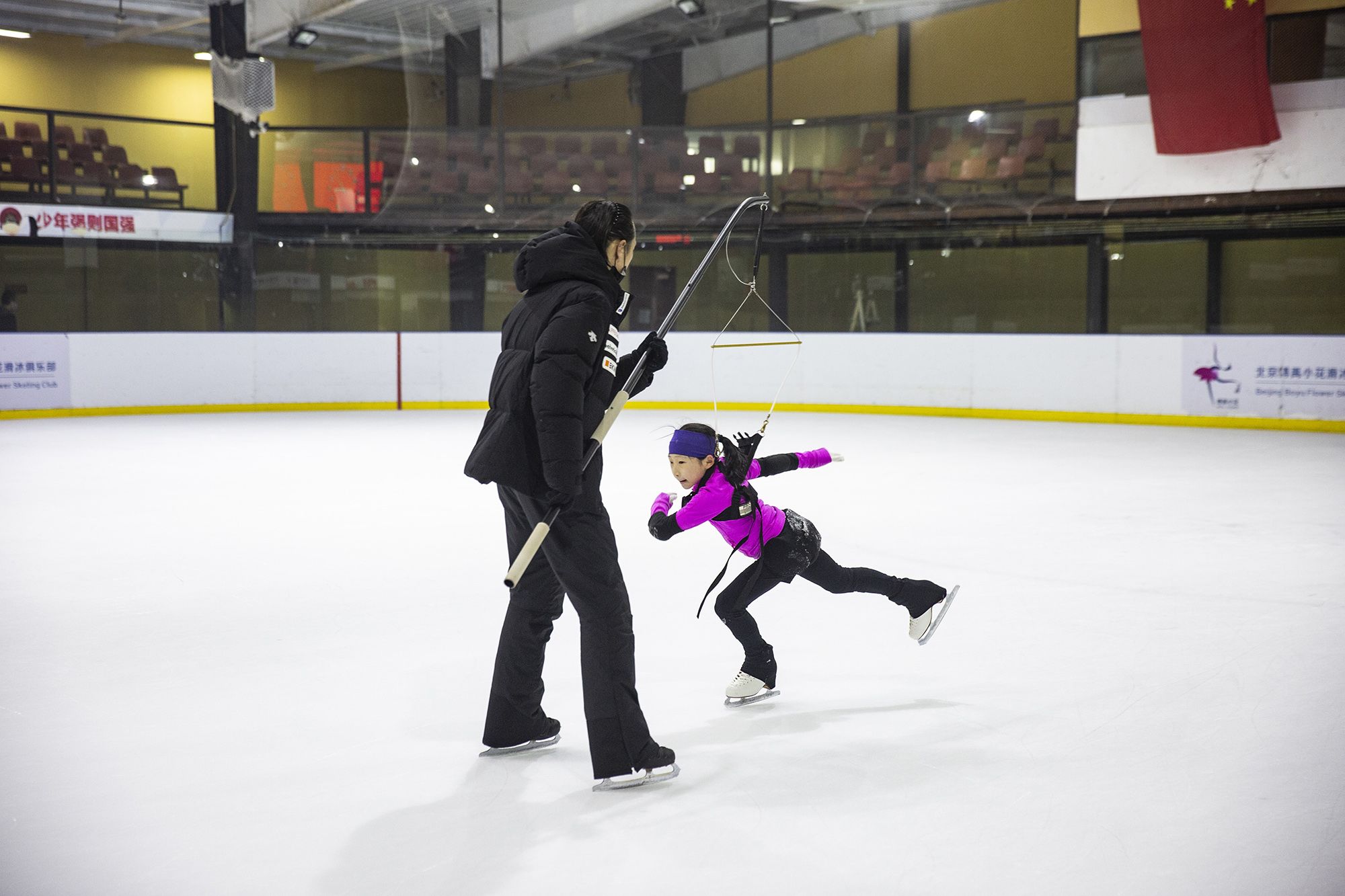
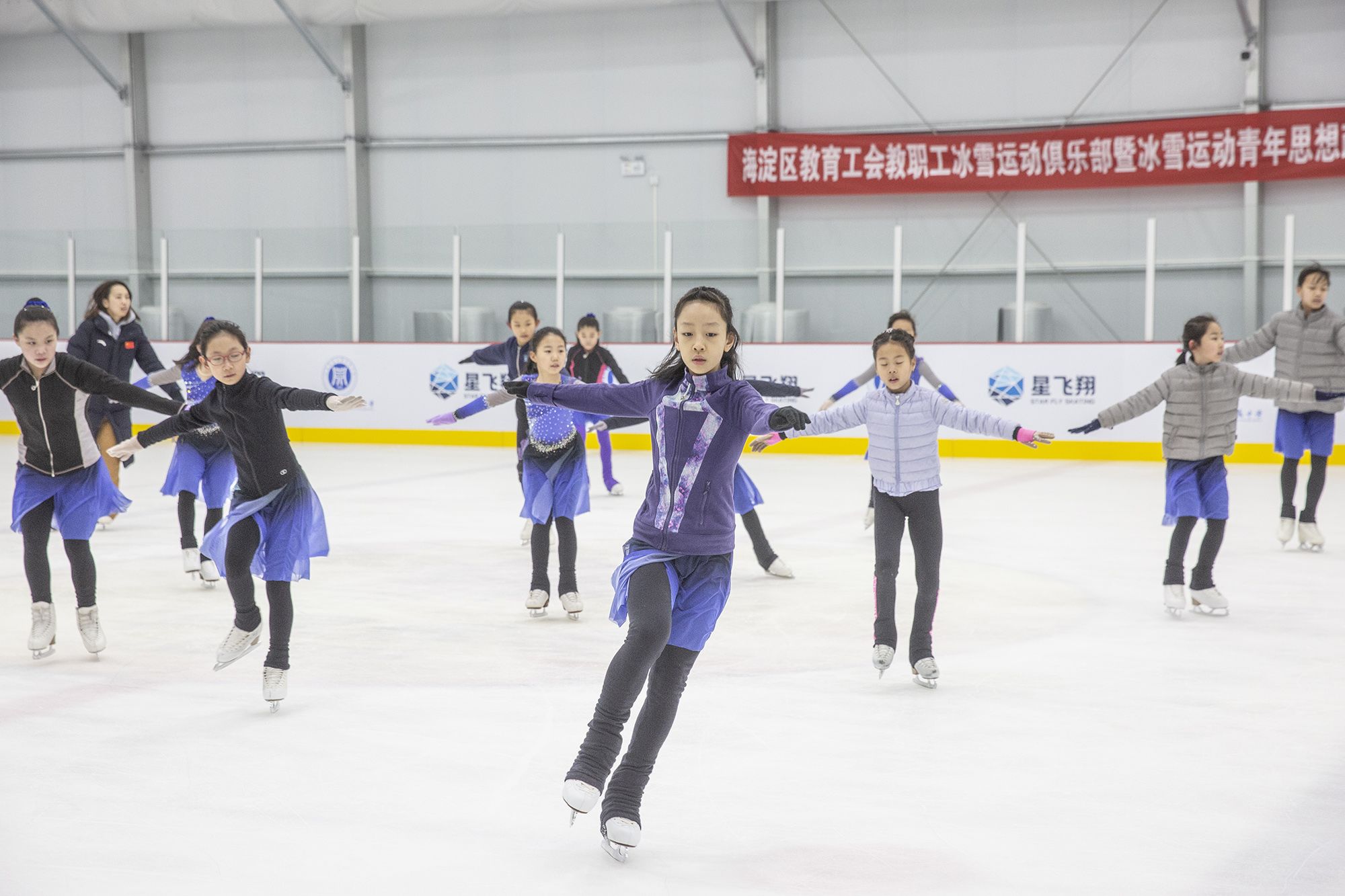
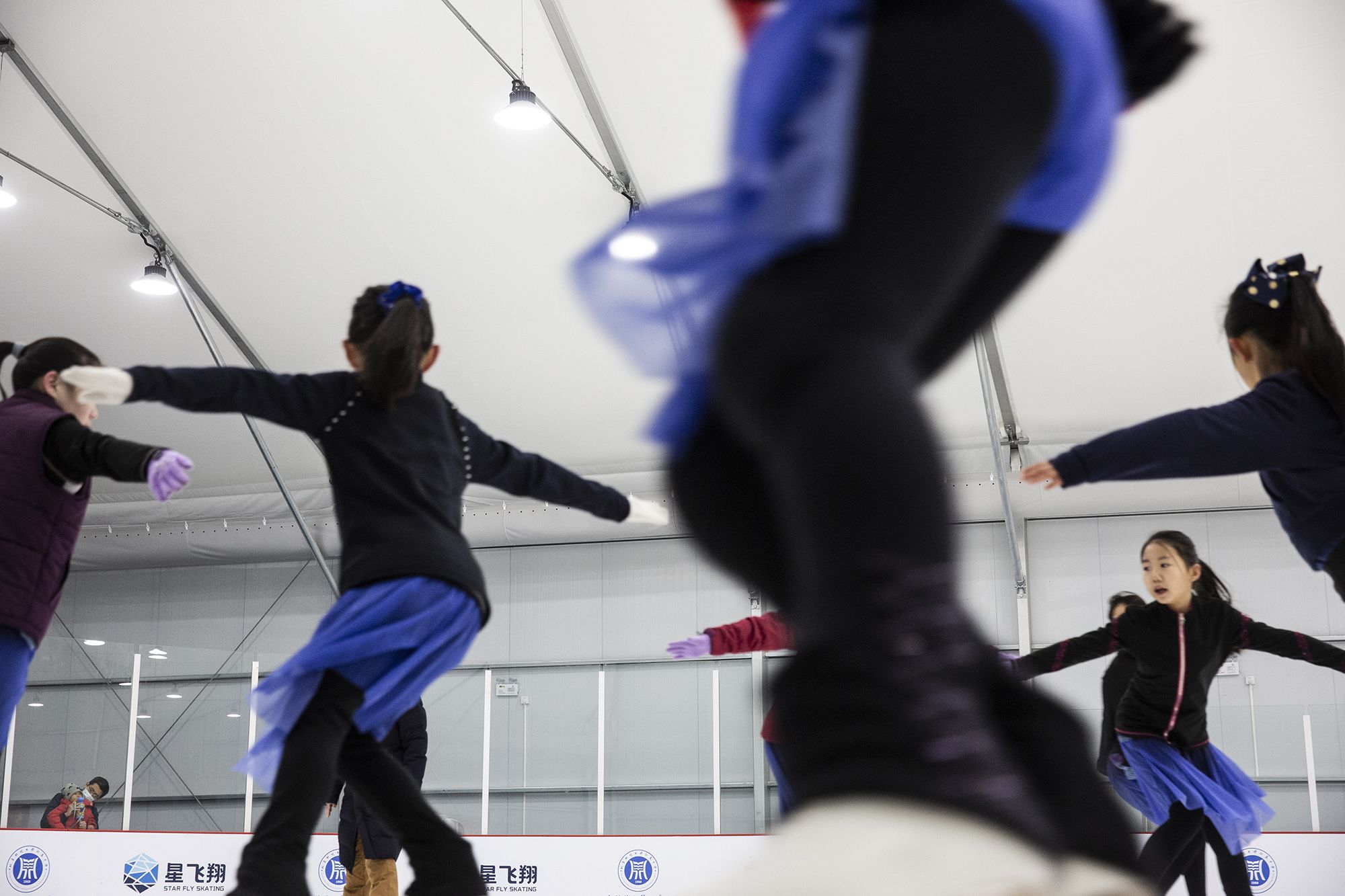
on March 14th, Sunday, at 8 a.m., melodious singing sounded in the ice rink on Beijing's North Fourth Ring Road. The skating team of Tsinghua Elementary School started an intensive skating training for an hour and a half. The children held hands in groups of two. Under the guidance of the coach, they practiced skating skills on the ice. Besides the coach's shouts, there is also the rustling sound of the skates and the ice in the entire skating rink.
Su Hang, ten years old, is a fifth-grade student in Tsinghua Primary School. She has been studying figure skating for three years. Her daily life is in three places: school, ice rink, and home. Every Sunday's group training is the school's "Ice and Snow Entering the School Campus" project. The training is free. Tsinghua Primary School launched the ice and snow sports education project in 1953 and has a long history. At present, 2200 students in Tsinghua Attached Elementary School can participate in this free training program.


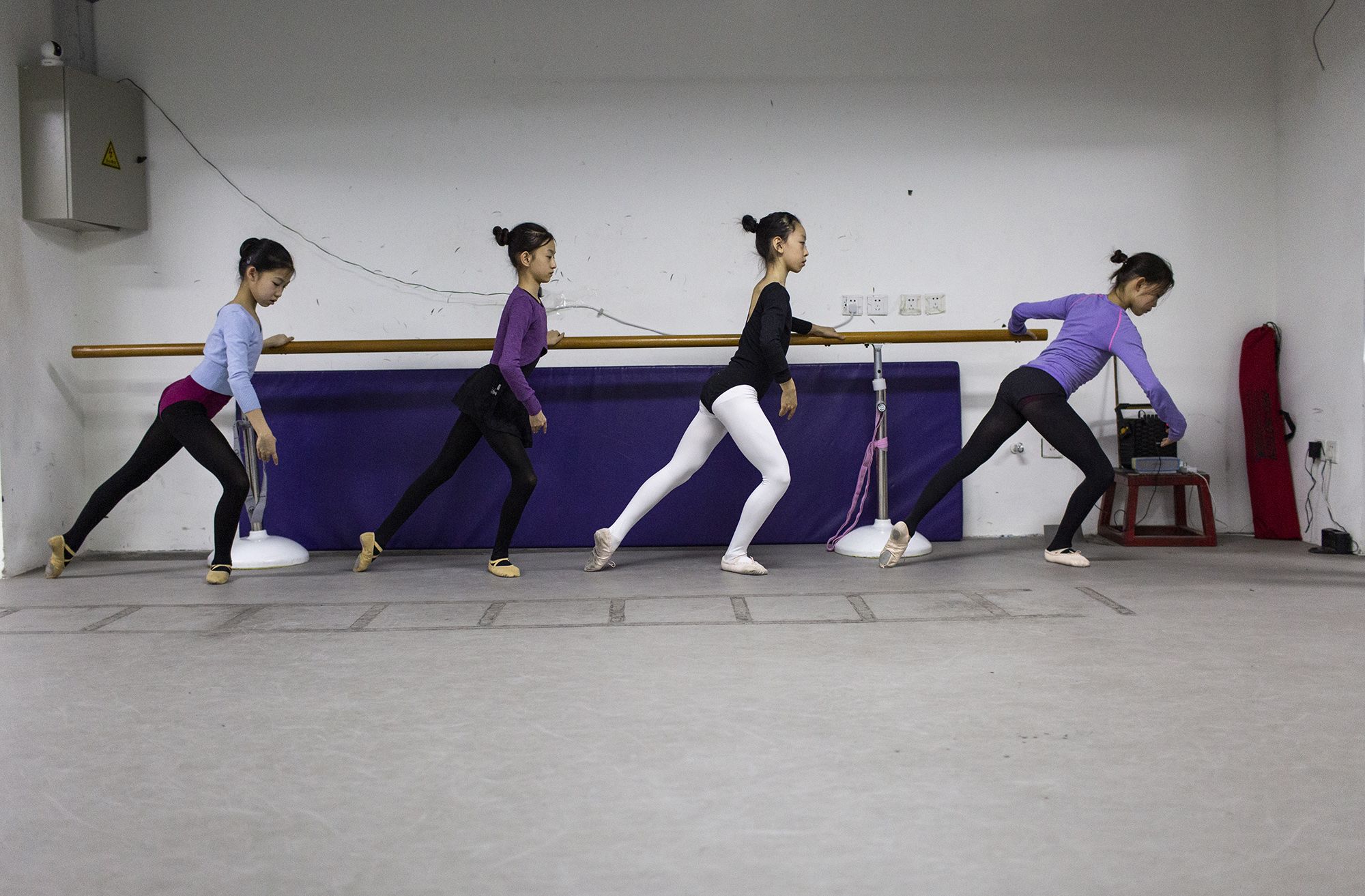

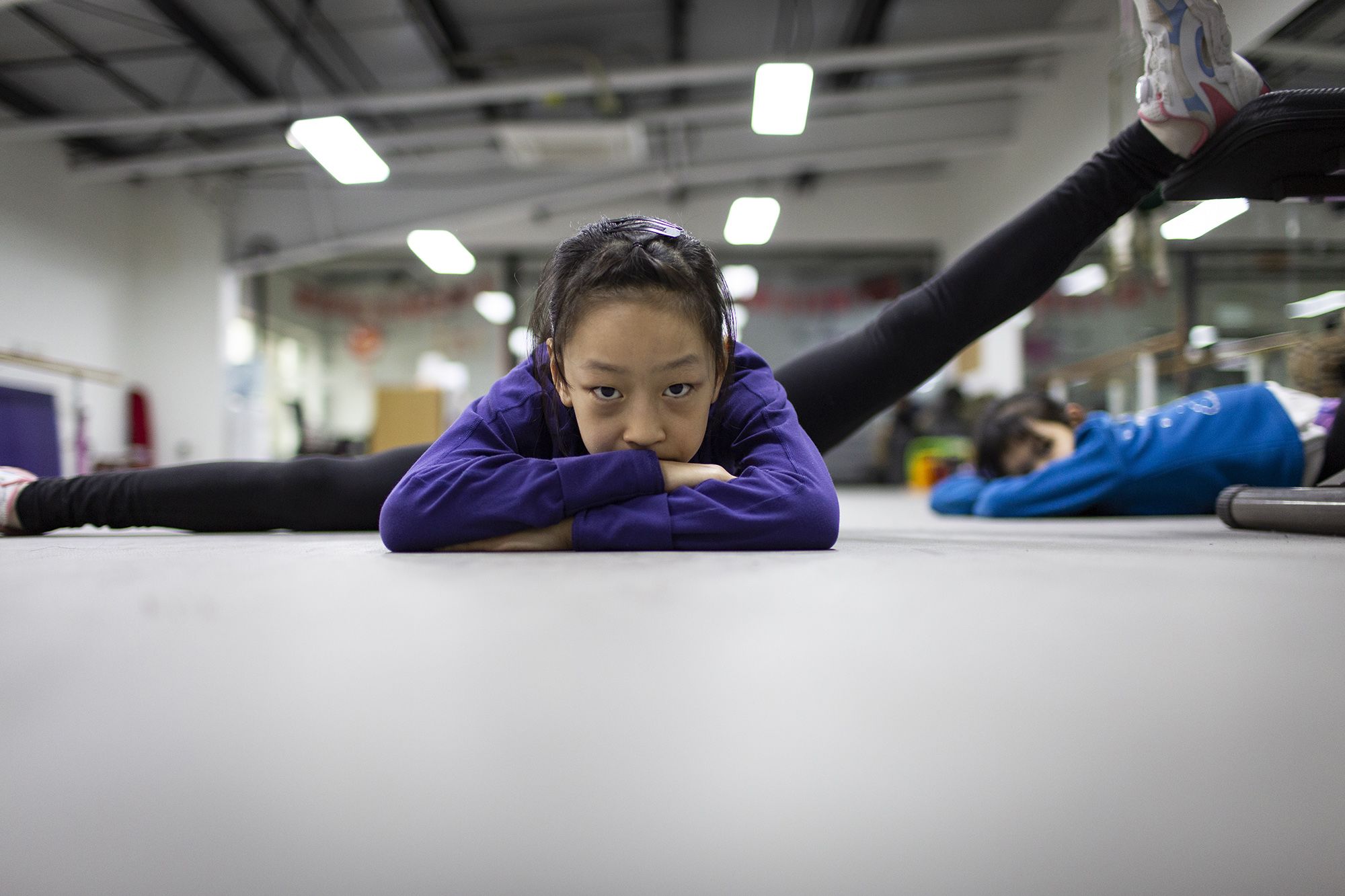


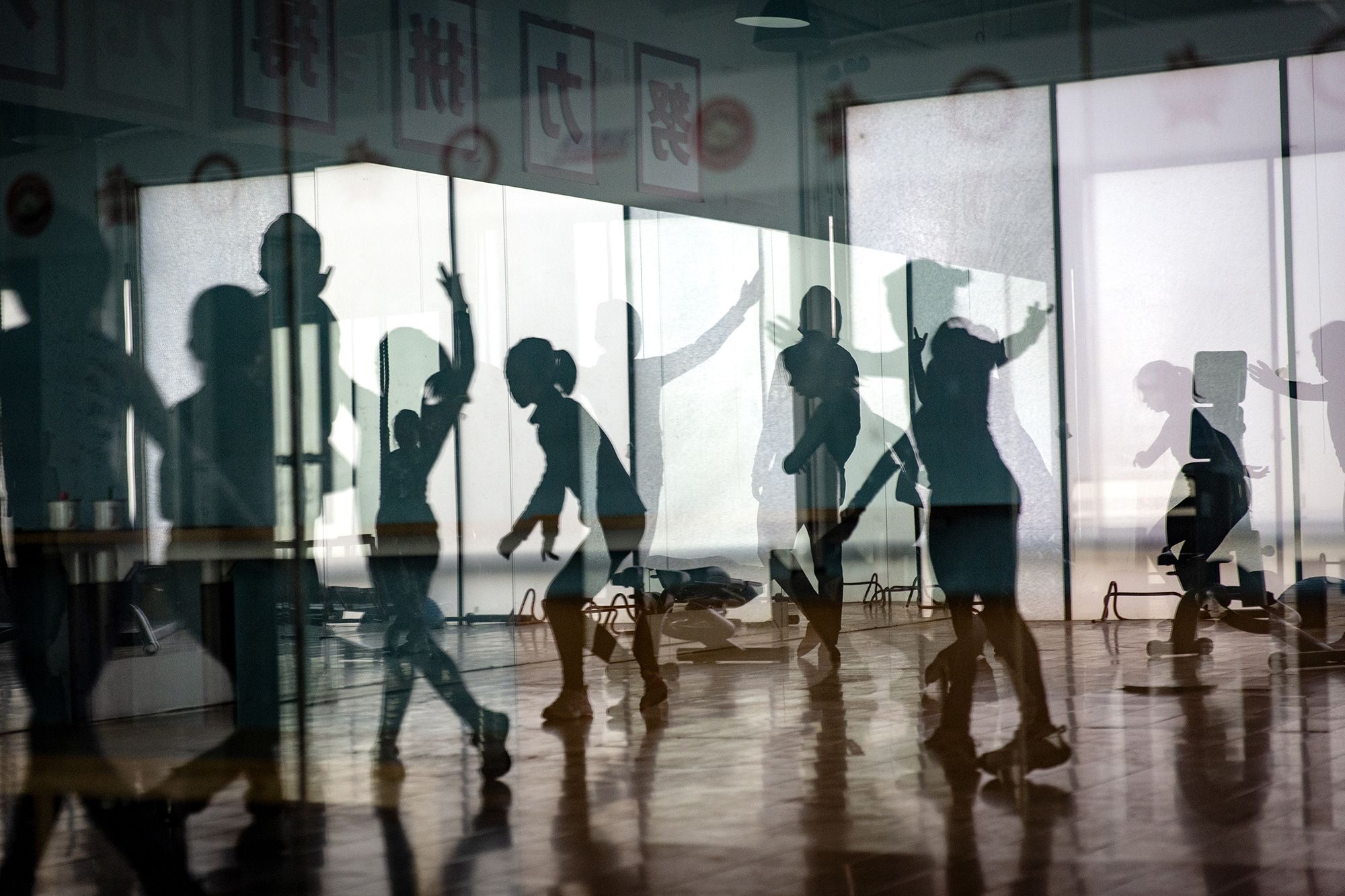
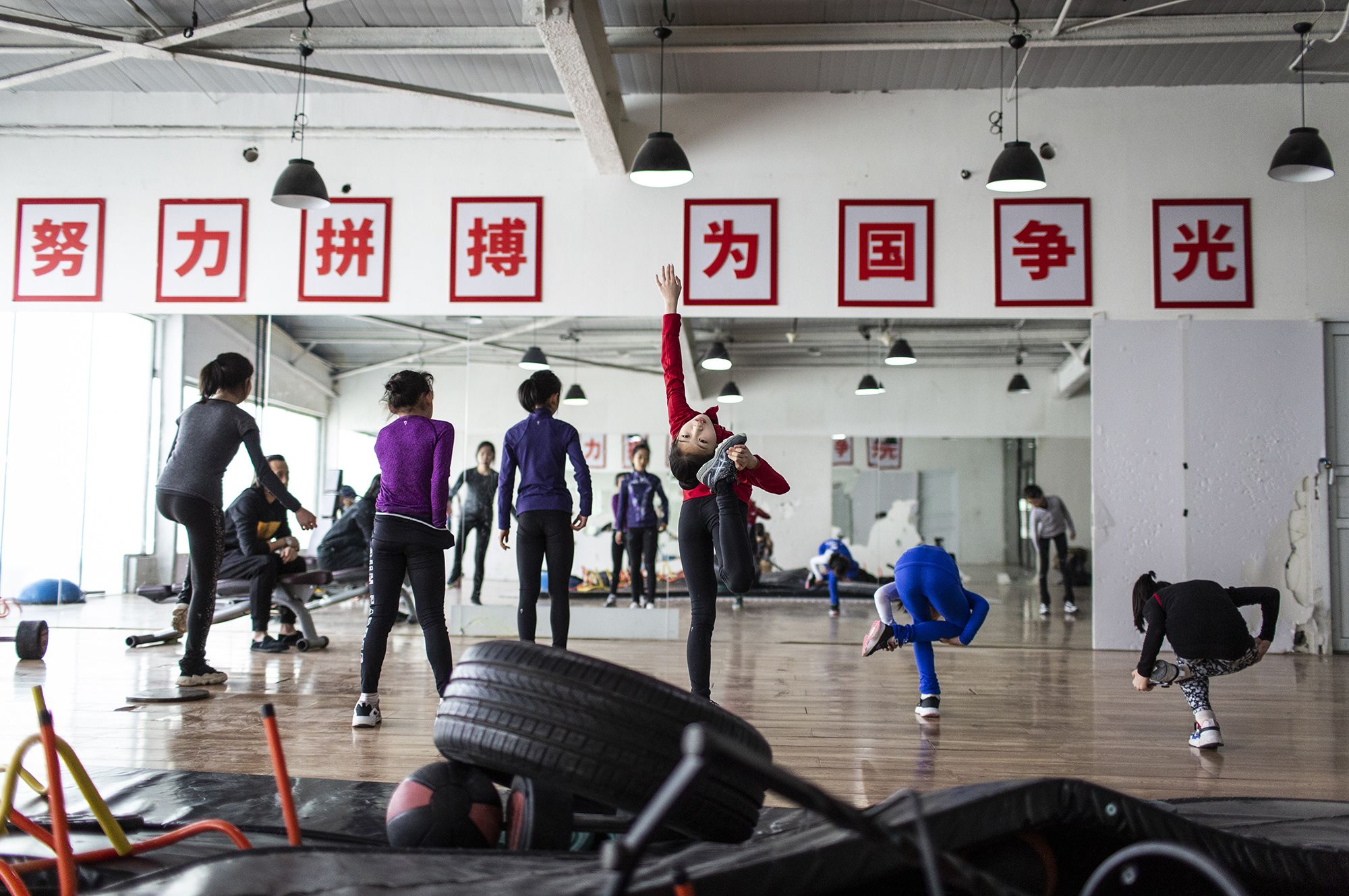
Children learning to skate are doing land training
The coach helps children who learn to skate with physical flexibility training.
Among these skating children, Sun Hang is a better skating student. To skate better, after participating in the training at 8 a.m., Su Hang also rushes to the skating club 20 kilometers away to join in the 12-noon one-to-one training session. Her mother is responsible for transporting her from school to the ice rink every day. It is already 9:30 in the evening when she returns home after training. She will write homework for 2 hours at home and go to bed at 11 p.m. Sun Hang lives the same every week, with almost no other rest time. Su Hang's mother is currently a full-time mother and is responsible for all her training and life.
To learn figure skating, they need to discover many other subjects, such as gymnastics, music, and ballet. These subjects need to learn in the club. All the subjects are learned. The essential cost for a year is more than 200,000 RMB. The fee is mainly used to pay for coaching fees and skating rink usage fees.
Since Beijing's successful bid to host the Winter Olympics, more and more children have begun to learn ice sports. Figure skating and ice hockey are developing well in Beijing. The holding of the Winter Olympics will bring great changes to Beijing and have a significant impact for a long time. Beijing's ice sports industry originated early and have a long history of development. Especially in ancient imperial palaces, ice sports, as an important entertainment sport for the royal family, have developed rapidly and become popular among the people in the late Qing Dynasty.
From the perspective of the Ice sports industry's development in Beijing, there are more projects in the Ice sports industry in Beijing. Ice hockey, skating, and other projects are popular, and parents are highly supportive. Since 2008, Beijing host the first National Junior Ice Hockey League. On-campus, it has actively promoted youth ice and snow and achieved good results. In the future, with the continuous introduction of policies, China's ice and snow industry will enter a period of rapid development. The Olympic cycle will become a powerful booster for the development of the ice and snow industry. By 2025, the number of people participating in ice and snow sports will reach 50 million, and 300 million people will participate in ice and snow sports.




The core of the ice sports industry is the development and operation of stadiums. The number, scale, and profitability of ice rinks are critical indicators to measure the ice sports industry's development level. As of 2016 statistics, there are 214 domestic ice rinks and 188 indoor ice rinks in China, which are distributed in 30 provinces, autonomous regions, and municipalities directly under the Central Government. Only the Tibet Autonomous Region in the country has no real ice rink.
There are 24 indoor ice rinks in Beijing, which is the largest in the country. Heilongjiang has 19 indoor ice rinks, ranking second, and Guangdong has 16 indoor ice rinks, ranking third. According to the State Sports General Administration website, the State Sports General Administration issued the "National Ice and Snow Field Facilities Construction Plan (2016-2022)". "Planning" pointed out that by 2022, the number of skating halls nationwide will be no less than 650, and the number of ski resorts will reach 800.
Teenagers are the foundation for the development of ice sports and the core driving force for ice sports development. With the Winter Olympics approach, the number of young people participating in ice hockey training has increased significantly.
Encouraged by the "Ice and Snow Sports Development Plan (2016-2025)" issued by the State Council, the nationwide campus ice and snow plan will be implemented. The number of characteristic schools for primary and secondary schools in the country will reach 2,000 in 2020 and 50,000 in 2025.
The ice and snow characteristic schools established by the "School Ice and Snow Project" are expected to cover 1.09 million households nationwide. In 2025, the estimated coverage of ice and snow schools may exceed 2.8 million households. In the next nine years of implementing the "School Snow and Ice Plan," the ice and snow education of the unique ice and snow schools will reach more than 10 million households.
According to international experience, when the per capita GDP reaches 5,000 US dollars, the people will demand sports. When the per capita GDP reaches 8,000 US dollars, sports will become one of the national economy's pillar industries; when the per capita GDP reaches 10,000 US dollars, it will usher in The "golden period" of the development of ice and snow sports.
In 2020, China's per capita GDP exceeded 10,000 U.S. dollars, and it has entered the primary level of developed countries. With the continuous development of China's economy, more people will participate in ice and snow sports. With a huge number of people, China, as one of the Asian countries, will also be a strong competitor in the Winter Olympics.
 Built with Shorthand